Authors
Fred M.OmwoyoExercises kit’s authors
Fred M.OmwoyoPublisher
Included in packages
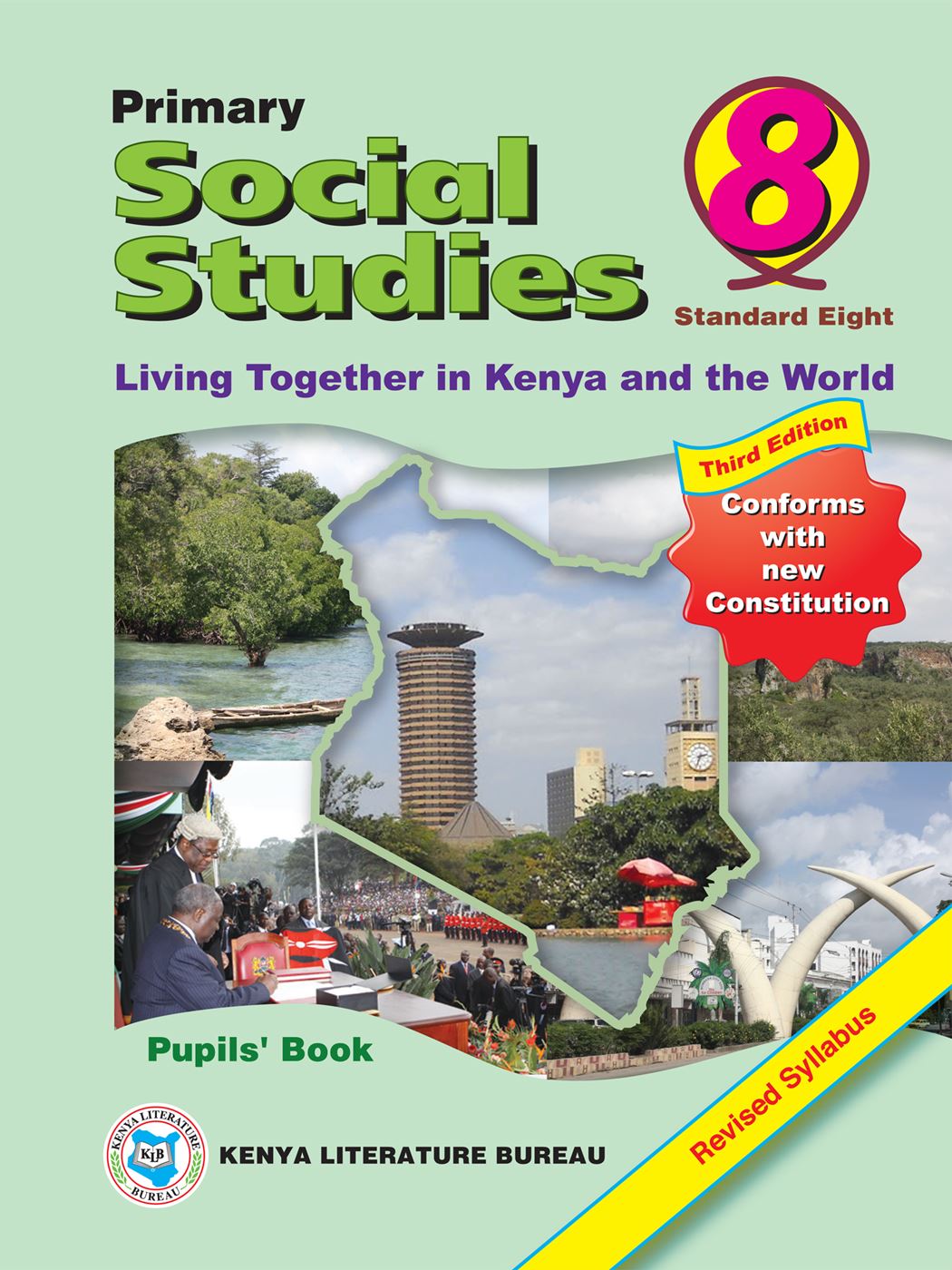
Primary Social Studies Standard 8 Pupils' Book is the eighth book in KLB's popular Primary Social Studies series. The book offers gradual guidance to the learners in its sy llabus coverage. The content covers the revised sy llabus topics comprehensively and is written in an interactive way with the readers in mind. It also includes amendments made to the sy llabus following the promulgation of the new constitution on 27th.August 2010.
There are numerous practical activities that make the learning of the subject easy; with clear and appropriate examples from the learners' environment.
To reinforce textual content, numerous full colour illustrations are used which help a great deal in making topics under consideration easy to understand.
There are Activities and Work to Do after each topic and test exercises after every unit, which give the book the strength of independent use and self evaluation by the learners.
Alongside the Pupils' Book, is the Teachers' Guide, which has valuable learning and teaching activities for successful teaching of Social Studies. It also provides answers to the 'Work to Do' in the Pupils' Book.
The author, Fred Omwoy o Mogeni is a renowned curriculum developer with vast experience in Social Studies.
1. The Physical Environment
Lead |
Chapter |
|---|---|
| 1.1. |
Map Reading and interpretation
Free chapter! |
| 1.2. | Physical features |
| 1.3. | Climate |
| 1.4. | Soil |
2. People and Population
Lead |
Chapter |
|---|---|
| 2.1. | Theories of Human Origin |
| 2.2. | Migration |
| 2.3. | Population growth |
| 2.4. | The population of Kenya |
| 2.5. | The population of Germany |
3. Social Relations and Cultural Activities
Lead |
Chapter |
|---|---|
| 3.1. | The family |
| 3.2. | Rights and responsibilities of spouses in marriage |
| 3.3. | Succession and inheritance |
| 3.4. | The school |
4. Resources and Economic Activities
Lead |
Chapter |
|---|---|
| 4.1. | Agriculture |
| 4.2. | Settlement schemes in Kenya |
| 4.3. | Irrigation farming in Kenya |
| 4.4. | Horticultural farming |
| 4.5. | Fish farming |
| 4.6. | Mining |
| 4.7. | Forestry |
| 4.8. | Wildlife and tourism |
| 4.9. | Industries |
| 4.10. | Contribution, problems and effects of industries in Kenya |
| 4.11. | Urbanisation |
| 4.12. | Transport and communication |
| 4.13. | Major road signs |
| 4.14. | First Aid procedures |
| 4.15. | Forms of communication Systems |
| 4.16. | Trade |
5. Political Development and Systems
6. Citizenship
Lead |
Chapter |
|---|---|
| 6.1. | Ways of becoming a Kenya citizen |
| 6.2. | How one may lose Kenyan citizenship? |
7. Democracy and Human Rights
Lead |
Chapter |
|---|---|
| 7.1. | Role of political parties in a democracy |
| 7.2. | Benefits of democracy |
| 7.3. | Bill of rights |
| 7.4. | Importance of bill of rights |
8. Law, Peace and Reconciliation
Lead |
Chapter |
|---|---|
| 8.1. | National unity |
| 8.2. | Factors that promote national unity |
| 8.3. | Importance of national unity |
| 8.4. | Factors undermining national unity |
9. The Government of Kenya
Lead |
Chapter |
|---|---|
| 9.1. | Formation of the government |
| 9.2. | Composition and functions of the arms of government |
| 9.3. | Sources of government revenue |
| 9.4. | Forms of government expenditure |
| 9.5. | Local authorities |
| 9.6. | National defence |
-
The study kit contains 52 chapters and 115 exercises of which 61 are in the chapters and 54 in the exercise stack.
-
Authors
Fred M.Omwoyo -
Exercises kit’s authors
Fred M.Omwoyo -
Subject
Social studies -
Grade
Standard 8 -
Kit's language
English -
Publisher
Kenya Literature Bureau -
Included in packages